

Test

- Enseignant-e: Valérie Gorin
- Enseignant-e: Karl Blanchet
- Enseignant-e: Jonathan Polonsky
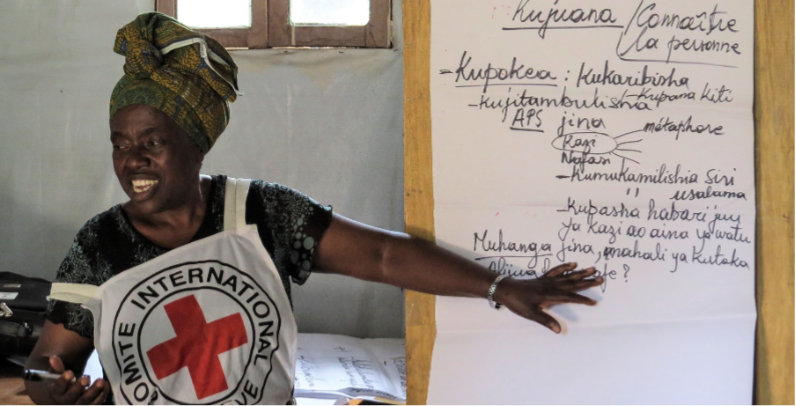
H.E.L.P. is a two-week course on the provision of humanitarian relief during disasters, armed conflicts, and other complex crises. It was created in 1986 by the International Committee of the Red Cross (ICRC), in partnership with the World Health Organization (WHO) and the University of Geneva, to professionalise the delivery of humanitarian assistance during emergencies, and to promote professional ethics and humanitarian principles.
There are complex issues that humanitarian personnel have to tackle, often during emergencies. What are the most effective means to protect the lives and dignity, and promote the health, of people affected by major climate change-related disasters or armed conflicts? What must be done to analyse a complex crisis, evaluate needs, assess the resources available, and set priorities?
What goes into planning and managing a response and, later, evaluating its effectiveness? How should threats to public health be prevented or responded to, mental and social well-being promoted, and care provided in a way that is effective, sustainable, respectful, and ethically sound?
ICRC-sponsored courses have been held in various parts of Europe, Latin America, North America, Africa, and Asia. Since 1986, over 5,000 health professionals and humanitarian aid workers from various organizations, academic institutions, Ministries, and military services have attended the course.
- Enseignant-e: Julie Barnet
- Enseignant-e: Ludovic Clement
- Enseignant-e: Aimad Ourahmoune
TBC.

This course addresses two main competences related to advocacy in the humanitarian sector. The first relates to the critical analysis of the definition and dynamics of advocacy for humanitarian assistance – including discussions around the positioning of humanitarian actors towards witnessing, activism and human rights, or the assessment of public campaigns for policy change or protection. Then, it introduces participants with the overall methodology that composes an advocacy plan. The course will focus on operational advocacy specifically, so that programme managers can learn how to address operational needs and field constraints in the advocacy strategy of the organisation.

- Enseignant-e: Karl Blanchet
- Enseignant-e: Maisoon Abuabdalla Elbukhari Ibrahim