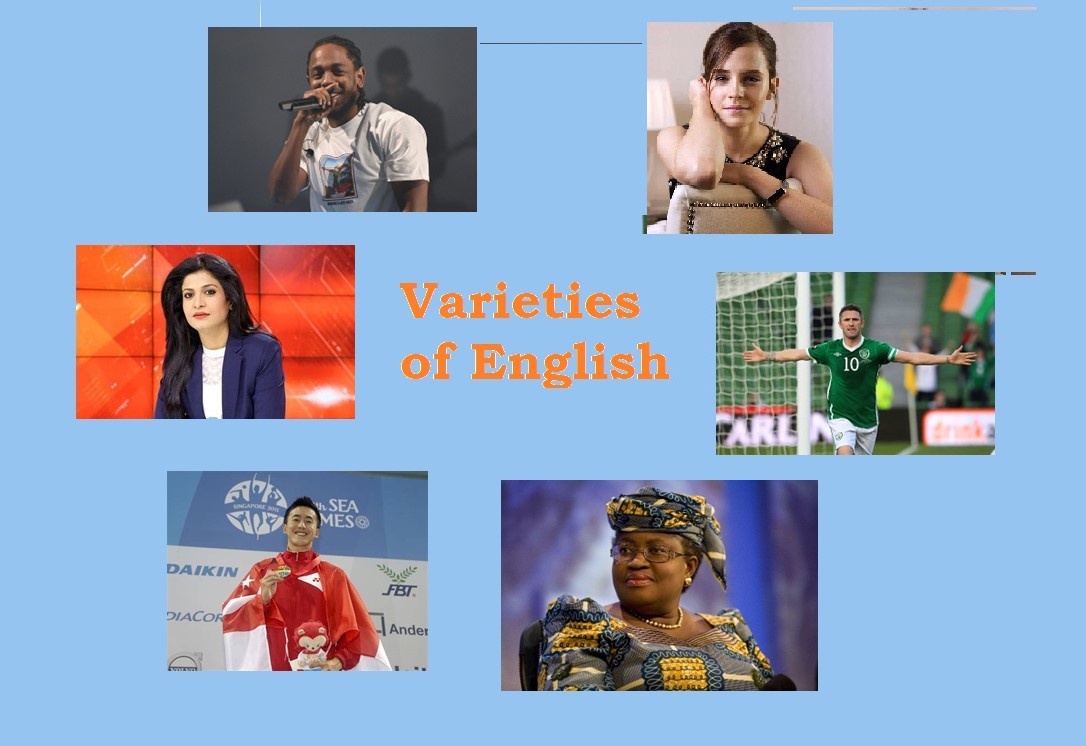
- Teacher: Genoveva Puskas
English has by now attained a status of `world language', functioning often as a Lingua Franca in areas where it is the native language of none of the inhabitants. This international status inevitably leads to an increasingly wide range of variation within the language. The question this class seeks to address is when variation leads to what can be considered (and recognized) as a variety. In order to consider a language a variety of English, we must first define the features of ENGLISH, as an abstract language, and identify where variation might occur. We will see that beyond the lexicon, many aspects of the phonology (sounds) the morpho-syntax (structure) and the discourse markers of a language make it a variety of English. Our world trip will take us from the British Isles (selection from Southern British English, Northern British English, Irish English, Scottish English), through the American Continent (Canadian English, Chicano English, African-American Vernacular English) and Australia & New Zealand to Africa (selection from South-African English, Liberian English, Nigerian English), India (Indian English) and Singapore (Singlish).