- Enseignant-e: Federico Sanchez Nieto
Objectives
The course will be structured as in-depth introduction to statistical methods applied to physics. The goal is to set solid foundations for future student understand the usage of statistical methods, to set the basis for the proper usage of statistical tools and interpretation of scientific results. This will be accomplished by accompanying the lectures with a set of exercises where the students can experience real case applications of the lectures.
Content
· Introduction to statistical tools in science.
· Basic concepts of probability.
· Properties of probability.
· Probability density functions.
o Exchange of variables.
o Moments of distributions.
o Characteristic functions.
· Law of large numbers and the concept of convergency.
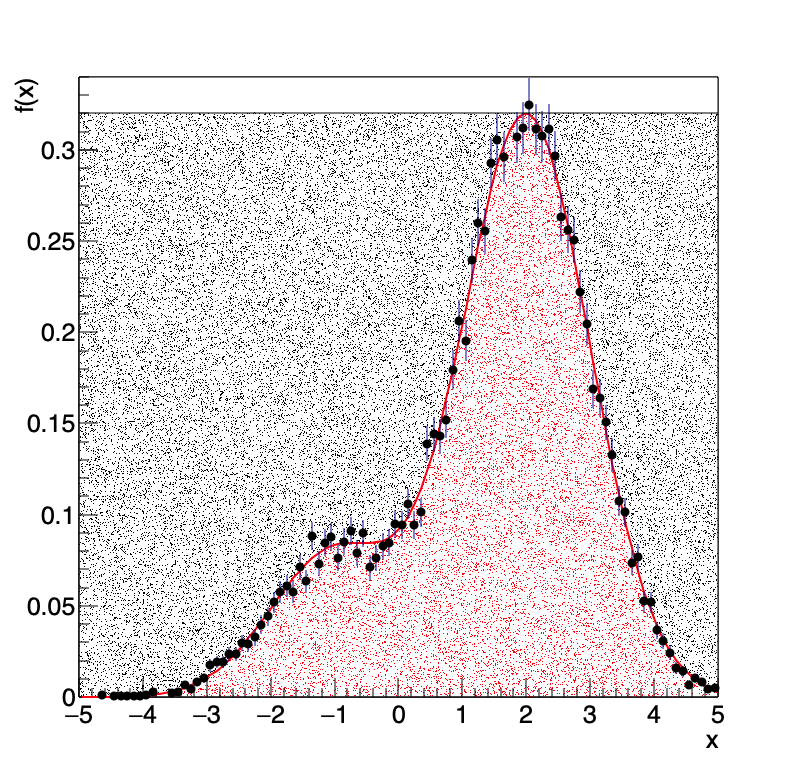
· Introduction to Monte Carlo techniques:
o Pseudo-random number generators.
· Basic Probability density functions.
· Error propagation.
· Confidence intervals.
· Estimation of parameters.
· Maximum likelihood.
· Least squares
· Hypothesis testing.
Lectures
The lectures will be structured in two consecutive hours per week of conceptual introduction, lecture style where the fundaments of statistics will be described. This will be complemented, in a different day, with 1 hour of hands-on applications with programming examples and exercises.
Evaluation
The course mark will be based on an individual project. A set of projects will be presented at the beginning of the course and each student will have to choose a project to work on for approximately 4 weeks (with overlap to the course). There will be a set of physics application projects to choose from, which will be presented at the beginning of the course. The students will have to work on the chosen projects in addition to attending the course. The projects will culminate in a final presentation and a written report, accompanied by the source code (see evaluation). The final grade will be based on documentation of code (using on-line platform such as git), presentation in front of the class, format, use of functions, clarity, reproducibility and a written report.